The principle
AI is not the product. Better learning is the product.
The goal is not to add AI decoration. The goal is to make explanations clearer, practice more active and course materials easier to navigate independently.
For lecturers, universities and teaching centers
Websites, quizzes, practice tools, simulations and course hubs built around your real materials — with AI serving the pedagogy, not replacing the teacher.
Work in English, Hebrew and Russian · Start with one lecture or module

The principle
The goal is not to add AI decoration. The goal is to make explanations clearer, practice more active and course materials easier to navigate independently.
What you receive
Each project is built from existing teaching materials and can start small.
A clear entry point with modules, videos, tasks, deadlines and links.
A focused page that combines explanation, examples and practice.
Immediate feedback, self-check and repeated practice.
Sliders, graphs and visual experiments that build intuition.
Reusable materials, guidance and a structure that can be updated.
A visible path from first contact to confident application.
Flagship case
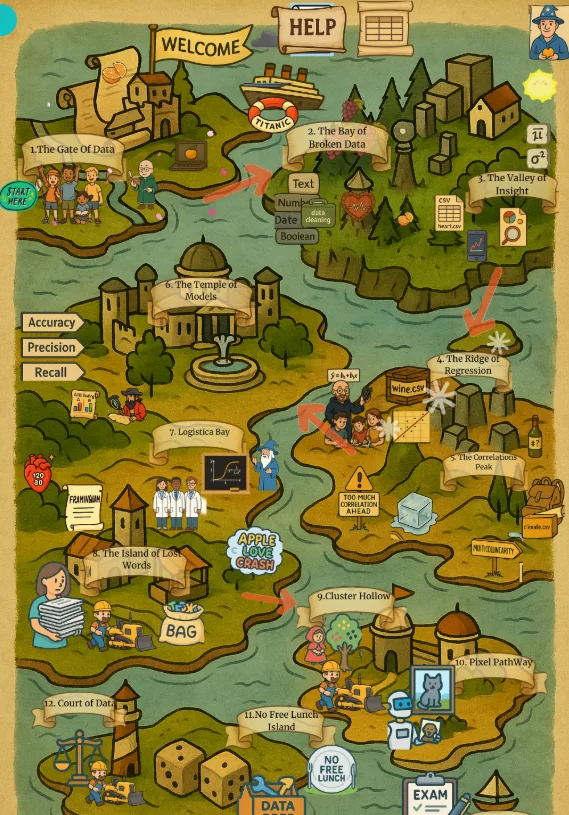
A statistics or Data Science lecture can be redesigned as a connected system rather than a pile of files.
Real examples
Selected examples from live course systems and educational experiments.
Structured entry points for modules, videos, assignments and exam preparation.
Open Data Analysis hub →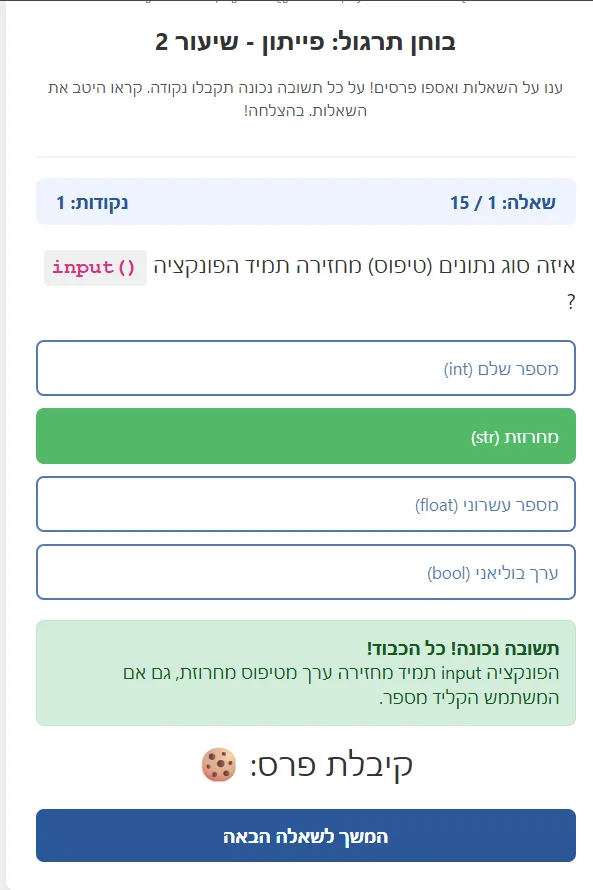
Self-check tasks with immediate feedback for Python, probability and statistics.
Open Python example →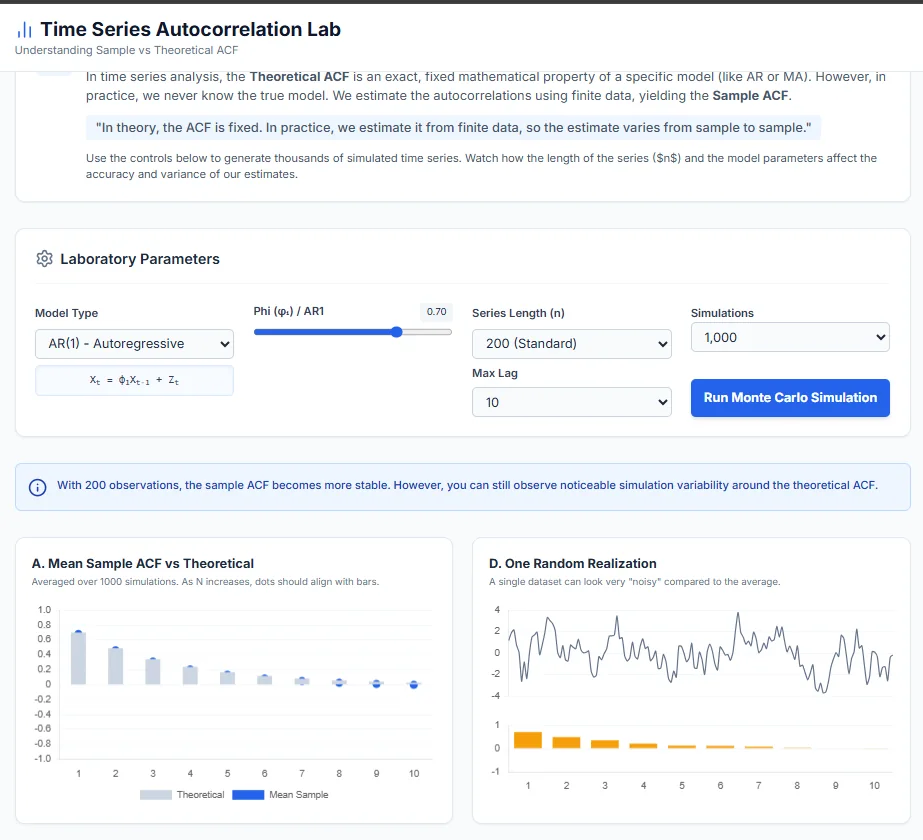
Interactive graphs and experiments that make abstract ideas concrete.
Open Time Series example →
Songs, visual stories and game-like tasks that support memory and engagement.
Watch an example →Live educational case
The free Russian-language course is an active testing ground for interactive course pages, quizzes, recordings, practice and community support. Materials are already available and can be studied at any time.
Process
One lecture, one recurring student difficulty or one course module.
A working page, quiz, visualization or trainer — not a slide deck about possibilities.
Check clarity, navigation and usefulness with real learners or the academic team.
Turn the successful prototype into a reusable course system.
Ways to work
A practical session for lecturers using their own course materials.
A focused prototype for one lecture or unit.
A connected set of pages, quizzes, simulations and teaching guidance.
Review an existing course and define a realistic improvement plan.
Student feedback
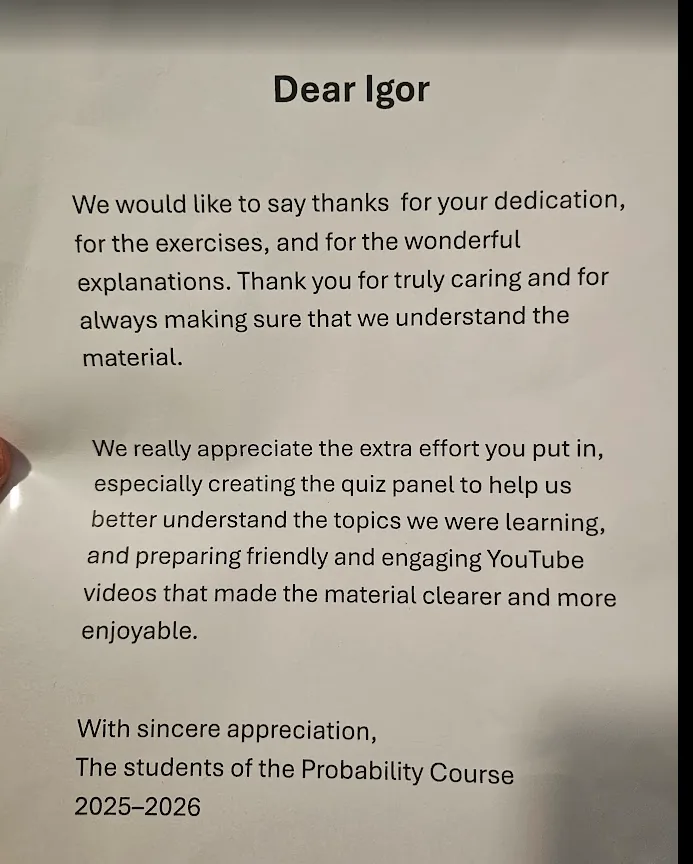
“Thank you for your dedication, the exercises and the wonderful explanations. The quiz panel and engaging YouTube videos made the material clearer and more enjoyable.”Students of the Probability Course, 2025–2026

“Thank you for the semester, your patience, warmth and genuine desire to teach us and expand our knowledge. We greatly enjoyed learning with you.”Students, July 14, 2025 · translated from Hebrew

About
Ph.D. in Statistics (2015–2020), Senior Lecturer at HIT and External Lecturer at the University of Haifa. Professional experience includes Microsoft, Intel, Skype and Huawei.
University teaching includes Data Science, statistics, probability, machine learning and programming; the lab grows out of tools and formats tested in real courses.
Author, with Henk Tijms, of “Surprises in Probability — Eighteen Short Stories” (2025). The teaching work combines academic rigor, industry experience and clear explanations.
In 2020–2021, he taught Data Science intensives for researchers and doctoral students in the University of Haifa’s Beit HaShita program, and in 2022 taught 13 hours at the two-week SICSS-Haifa summer institute. In 2026 he presented at IICDHSS at the Technion and at ICECA; his current research pipeline includes one active arXiv preprint and seven additional journal submissions.
FAQ
No. The lecturer remains responsible for meaning, judgment and the learning relationship. AI is used to accelerate production, variation and interaction.
Yes. A small, clearly defined pilot is usually the best first step.
Yes. Slides, recordings, assignments and recurring student questions are the starting point.
Projects and workshops can be delivered in English, Hebrew and Russian.
A project can be deployed as a standalone website or integrated into the institution’s existing learning environment, depending on technical constraints.
Contact
Send a short description of the course, audience and difficulty you want to solve. The first response will focus on a realistic next step.
Direct email: igkleiner@gmail.com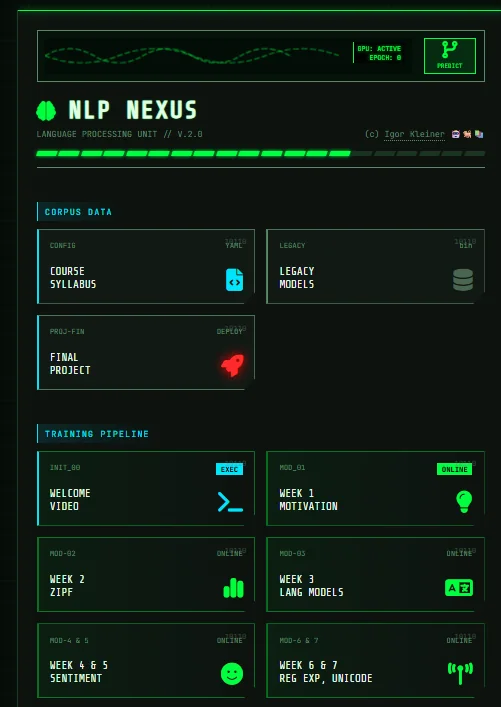 NLP course panel
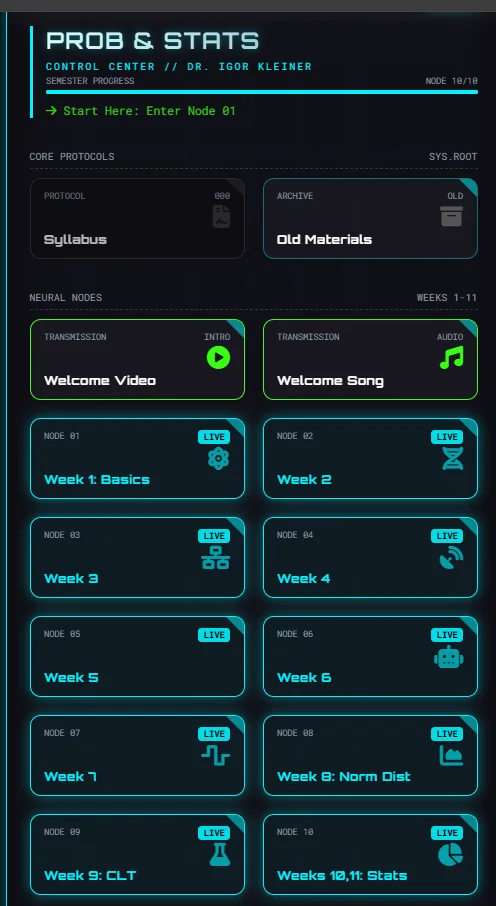 Probability control center
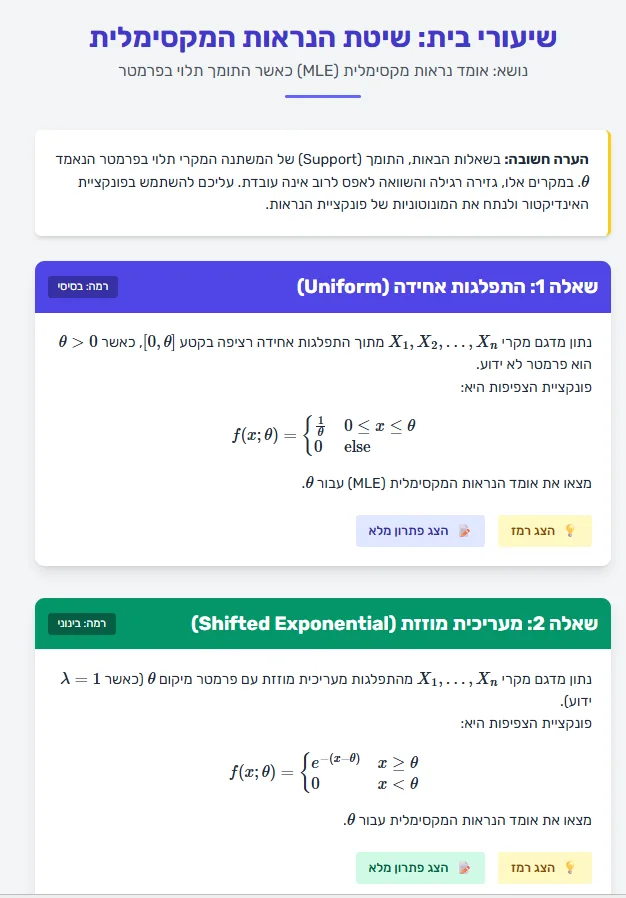 MLE quiz
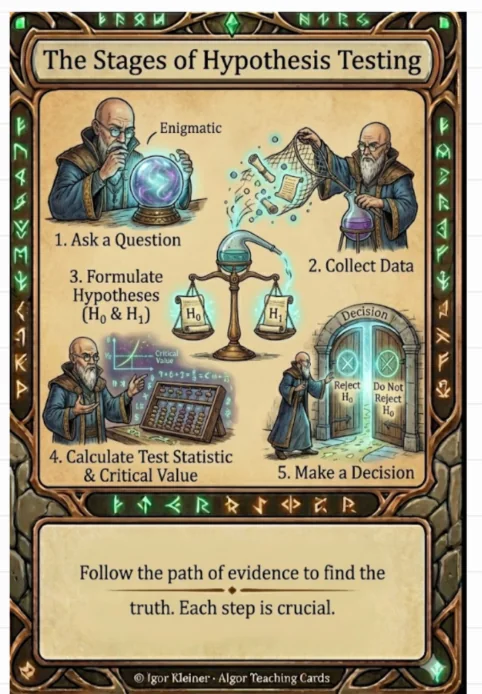 Hypothesis testing
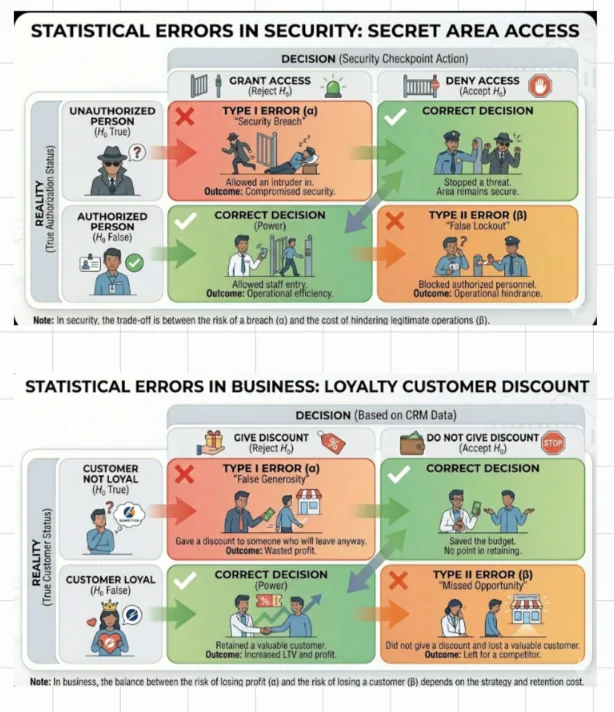 Statistical errors
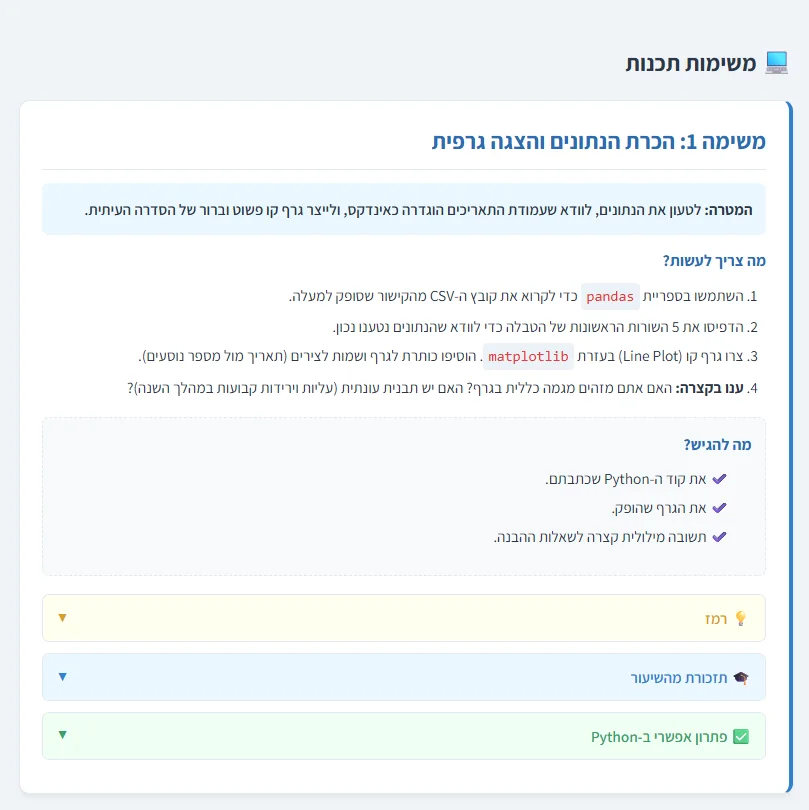 Course task page